Hey everyone! You know, sometimes I look at the news and feel a bit overwhelmed by all the environmental challenges we face. But then I dive into what brilliant minds are doing in environmental science, and honestly, it sparks a massive amount of hope in me.
We’re truly at a pivotal moment, aren’t we? It’s not just about reacting anymore; it’s about pioneering a sustainable future with incredible ingenuity.
From the cutting-edge of AI revolutionizing how we monitor our planet, to breakthroughs in renewable energy that are literally changing the game, the field is absolutely exploding with innovation.
I’ve been digging deep into the latest trends, and let me tell you, it’s a fascinating blend of high-tech solutions and a renewed understanding of nature’s own power.
We’re seeing everything from smart cities leveraging IoT sensors to make urban living greener, to advanced bioremediation techniques that clean up pollution using nature’s own tiny helpers.
It’s a holistic approach, recognizing that our planet’s health is deeply intertwined with human well-being, and that everyone, from scientists to everyday folks, has a role to play.
So, if you’re curious about how we’re going to tackle climate change, protect our precious biodiversity, and build truly sustainable societies, you’re in for a treat.
Ready to discover what’s next for our planet?
AI and IoT: The Brains Behind a Greener Planet
Okay, so let’s talk about how technology is essentially becoming Mother Nature’s best friend. I’ve been fascinated by how Artificial Intelligence (AI) and the Internet of Things (IoT) are completely reshaping our approach to environmental challenges. It’s not some futuristic concept anymore; it’s happening right now, making our world smarter and, thankfully, a lot greener. Imagine sensors everywhere, collecting data on everything from air quality in our cities to the health of remote ecosystems. This real-time data allows us to make incredibly informed decisions, much faster than ever before. For example, AI-powered tools are now capable of analyzing vast amounts of biodiversity data, revolutionizing conservation efforts by enabling scientists and policymakers to make better-informed decisions. This kind of insight is invaluable for preventing issues before they become crises, or for responding with surgical precision when they do. I remember seeing a presentation on how AI is used to predict changes in forest greenness across Latin America, helping conservationists respond swiftly to illegal logging. It truly blew my mind how sophisticated these systems have become.
Smart Monitoring, Smarter Decisions
When I think about smart monitoring, I immediately picture those hidden dangers we can now detect with incredible accuracy. We’re talking about everything from early detection of wildfires, where AI analyzes satellite imagery to spot tiny flickers of heat, to identifying leaks in vast water pipe networks before they cause significant waste. AI algorithms can analyze sensor data to predict pipe bursts, enabling preemptive repairs. This isn’t just about efficiency; it’s about preventing catastrophic environmental damage and saving precious resources. The precision agriculture movement is another area where I’ve seen this come alive, with IoT sensors telling farmers exactly when and how much water their crops need, cutting down on waste significantly. It’s a game-changer, and it’s making agriculture more sustainable than ever before. I’ve personally been trying to implement smart home tech to reduce my own energy consumption, and the data feedback is incredibly motivating.
Urban Green Living Gets an Upgrade
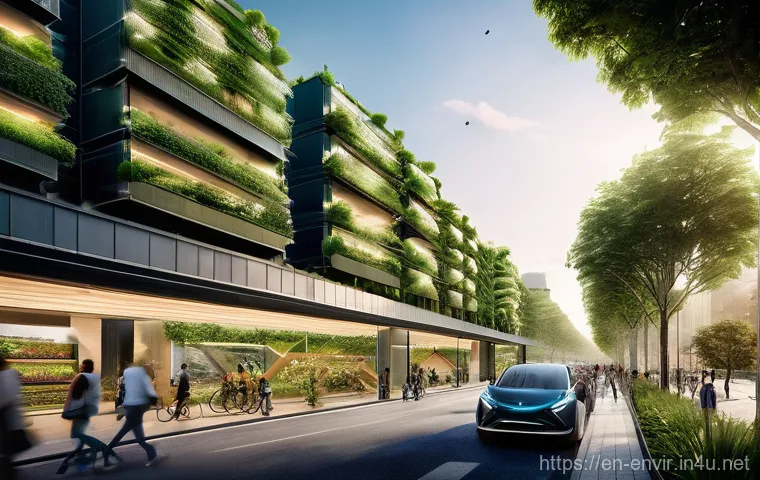
Our cities, often seen as concrete jungles, are actually transforming into vibrant, intelligent ecosystems thanks to IoT. Think about smart streetlights that adjust based on natural light, reducing energy consumption, or waste bins that signal when they’re full, optimizing collection routes and cutting down on emissions. In 2025, smart water management powered by IoT is a game-changer, offering real-time insights, predictive analytics, and automated control over water systems. We’re also seeing green roofs and vertical farms integrated with IoT, creating cleaner air and more localized food production. I often wonder how much more impactful it would be if every building embraced this technology. It’s not just about flashy gadgets; it’s about creating urban environments that are more livable, more sustainable, and ultimately, healthier for all of us. The advancements in smart building technologies that reduce energy consumption are truly impressive.
Renewable Energy’s Next Frontier: Beyond Solar and Wind
We’ve all heard about solar panels and wind turbines, and they’re undeniably crucial to our clean energy future. But let me tell you, the innovation in renewable energy is moving at a blistering pace, far beyond what most people realize. It’s not just about bigger panels or more efficient turbines anymore. We’re seeing groundbreaking research into entirely new ways of harnessing power, pushing the boundaries of what’s possible. The global energy storage market is projected to grow significantly, highlighting the importance of these advancements. This shift is incredibly exciting because it means we’re diversifying our energy portfolio, making our grids more resilient, and finding solutions for regions where traditional renewables might not be as effective. I personally get such a thrill whenever I read about a new energy breakthrough – it feels like we’re constantly on the verge of something truly revolutionary. The fact that renewable energy is forecast to account for almost half of global electricity generation by 2025 is a testament to this incredible progress.
Tapping Into Unconventional Sources
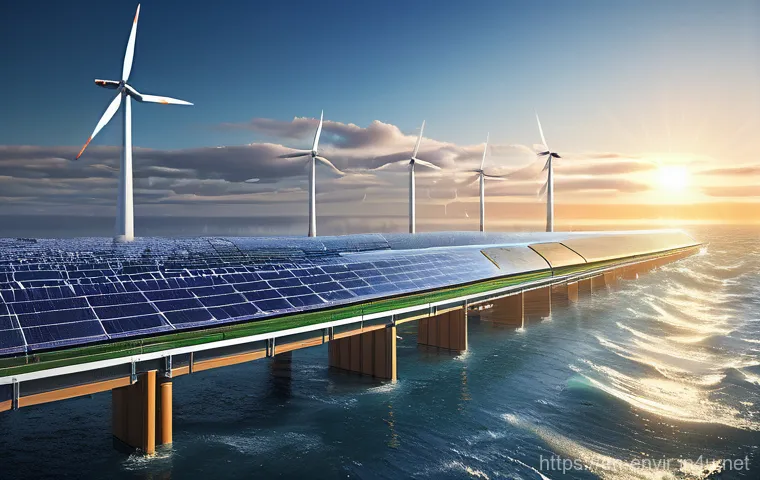
When I talk about unconventional sources, I’m thinking about things like geothermal energy evolving beyond volcanic regions, harnessing the Earth’s internal heat with new drilling techniques. Or the incredible potential of tidal and wave energy, turning the consistent power of our oceans into electricity. There’s even talk of gravity storage systems, using concrete blocks to store excess energy and release it when needed, offering a clever alternative to traditional batteries. These innovations are critical for reaching net-zero emissions, especially for sectors that are difficult to electrify, like heavy industry. Imagine the impact if we could tap into just a fraction of the ocean’s power! It’s a vast, consistent resource, and the engineering challenges are immense, but the potential rewards are even greater. I’ve always been fascinated by the sheer power of nature, and seeing us learn to harness it in these creative ways gives me so much hope.
Energy Storage: The Holy Grail
Let’s be real, renewable energy’s biggest challenge has always been storage. The sun doesn’t always shine, and the wind doesn’t always blow. But the breakthroughs in energy storage are nothing short of phenomenal. We’re moving beyond conventional lithium-ion batteries to advanced solutions like solid-state, flow, and thermal batteries, which offer higher energy density, longer life, and greater safety. These new technologies are not only essential for stabilizing our energy grids, ensuring a consistent power supply even when renewable generation is intermittent, but also for sectors like electric vehicles and grid-scale storage. I remember a few years ago, battery life was such a huge concern, but now, with advancements like sodium-ion and zinc-based batteries becoming cheaper and safer, it feels like we’re truly turning a corner. It’s all about creating a reliable, flexible energy infrastructure that can truly stand the test of time, and these storage solutions are the unsung heroes making it happen.
Nature’s Own Cleanup Crew: Bioremediation Takes Center Stage
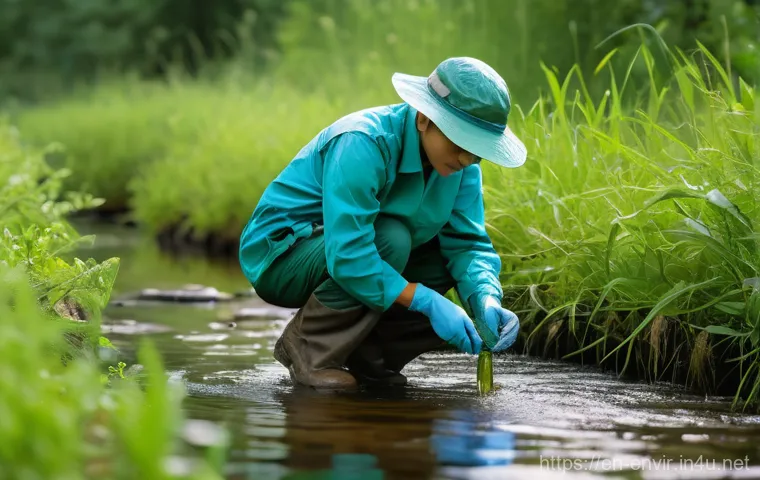
Have you ever thought about how nature has its own way of healing itself? Well, environmental science is now supercharging that natural process with something called bioremediation. It’s truly amazing! Instead of harsh chemicals, we’re using living organisms – think tiny microbes, plants, or fungi – to break down pollutants in soil, water, and even air, turning harmful substances into less toxic or non-toxic forms. This isn’t just a cleaner approach; it’s often more cost-effective and less disruptive than traditional methods. The global bioremediation technology and services market is projected for substantial growth, driven by increasing environmental concerns and regulations. I find it incredibly elegant, almost like we’re giving nature a helping hand to do what it does best. I recently read about how genetically engineered microbes are being developed with enhanced capabilities for degrading specific mold species, and it’s just mind-boggling.
Microbes to the Rescue
The unsung heroes of bioremediation are undoubtedly microbes. These microscopic powerhouses are being harnessed and even engineered to target specific contaminants. From oil spills to industrial waste, these tiny organisms are literally eating pollution. Advances in microbial degradation and phytoremediation are contributing to market expansion. Researchers are focusing on optimizing enzyme mixtures that can target a broader spectrum of mold types and their associated toxins. It’s like having an army of specialized workers, each trained to clean up a different type of mess. I often think about the incredible complexity and resilience of life on Earth when I hear about these advancements. It’s a testament to how much we can learn from and leverage natural processes to solve our biggest problems.
Reclaiming Contaminated Lands
One of the most impactful applications of bioremediation is in reclaiming contaminated land. This means turning polluted sites – old industrial zones, former mining areas, or places affected by spills – back into usable, healthy environments. In-situ bioremediation, which treats contaminated soil or groundwater directly at the site, is gaining popularity due to its reduced disruption and cost-effectiveness. It’s about restoring ecosystems to their natural state and preventing further contamination. Imagine a barren, toxic landscape slowly regenerating, with plants and microbes working together to pull pollutants from the soil. That’s the power of bioremediation. It’s not just cleaning up; it’s about giving life a second chance. Here’s a quick look at some key bioremediation methods:
| Method | Description | Target Contaminants |
|---|---|---|
| Biostimulation | Enhancing natural microbial activity by adding nutrients or oxygen. | Hydrocarbons, solvents |
| Bioaugmentation | Introducing specific microbial strains to a contaminated site. | Pesticides, industrial chemicals |
| Phytoremediation | Using plants to absorb, degrade, or stabilize pollutants. | Heavy metals, organic pollutants |
| Mycoremediation | Utilizing fungi to degrade environmental pollutants. | Petroleum, pesticides |
Circular Economy: Redefining How We Use, Re-use, and Thrive
The traditional “take-make-dispose” model of consumption is, quite frankly, unsustainable. It’s why I’m so incredibly passionate about the circular economy. This isn’t just a buzzword; it’s a fundamental shift in how we design, produce, and consume, aiming to keep resources in use for as long as possible, extract the maximum value from them while in use, then recover and regenerate products and materials at the end of each service life. The circular economy industry has shown steady growth with significant investment. It’s about reimagining waste not as something to throw away, but as a valuable resource. I truly believe this is one of the most critical shifts we need to make as a global society, and it excites me to see so many businesses embracing it. Companies that embrace circular principles at the core of product and service design aren’t just dodging disruptions; they’re defining markets.
From Linear to Looping
Moving from a linear economy to a circular one means rethinking everything. It’s about designing products for durability, reusability, and recyclability from the get-go. No more planned obsolescence! This also involves innovative business models like product-as-a-service, where companies retain ownership of products and customers pay for access, incentivizing manufacturers to make products that last. Blockchain technology is even being used to track materials from source to shelf, ensuring transparency and facilitating recycling. It’s about creating closed-loop systems where materials are reused, recycled, or repurposed in perpetuity. The thought of designing a system where almost nothing goes to waste? That’s not just efficient; it’s elegant. It truly makes you question why we ever did things differently.
Designing for Longevity and Regeneration
This aspect of the circular economy really resonates with me. It’s about building things to last, making them easy to repair, and ensuring their components can be easily recycled or biodegraded at the end of their useful life. We’re seeing a huge focus on bio-based materials and remanufacturing, extending the lifecycle of products and drastically reducing the need for new raw materials. For instance, upcycling schemes, like processing brewery grains into flour, are gaining traction, showing how creative we can get with “waste.” It’s a complete overhaul of how we approach manufacturing and consumption, driven by both consumer demand and smart regulations. I’ve personally tried to extend the life of my electronics by repairing them rather than replacing them, and while it sometimes takes a bit more effort, the satisfaction of reducing waste is immense.
Protecting Our Wild Neighbors: Innovations in Biodiversity Conservation
The biodiversity crisis is real, and it’s heartbreaking to see so many species and ecosystems under threat. But the good news is that technology and innovative thinking are providing powerful new tools for conservationists. It’s not just about setting aside protected areas anymore; it’s about actively monitoring, understanding, and protecting our planet’s incredible variety of life. Biodiversity loss is ranked as one of the top five threats facing humanity in the next decade. This is an area where I feel a deep personal connection, as the health of our planet’s wildlife directly impacts our own well-being. The integration of digital technologies is becoming indispensable for understanding, monitoring, and conserving biodiversity. I’m constantly amazed by the ingenuity people are putting into safeguarding our wild neighbors.
Tech for Wildlife Tracking and Protection
Imagine being able to track endangered species with pinpoint accuracy, or detect illegal poaching in real-time. That’s what cutting-edge conservation technology is allowing us to do. Drones equipped with thermal cameras are surveying vast areas, advanced camera traps are capturing crucial data, and bioacoustics monitoring is helping scientists infer the health and diversity of species by analyzing soundscapes. These tools give conservationists an unparalleled advantage, enabling swift action and more effective protection strategies. I remember watching a documentary about drones being used to monitor coral reef health after a bleaching event, and it really struck me how much more we can learn and do with these technologies. It’s not just about collecting data; it’s about translating that data into meaningful conservation outcomes.
Restoring Ecosystems, One Project at a Time
Beyond protection, there’s a growing focus on actively restoring degraded ecosystems. This can range from replanting native forests and rehabilitating wetlands to reintroducing species to areas where they once thrived. Digital mapping and modeling ecosystems are enhancing our ability to plan and execute these restoration projects with greater precision. It’s a long, often challenging process, but the results can be incredibly rewarding. The idea that we can reverse some of the damage we’ve done and help nature reclaim its balance is a powerful motivator. I’ve volunteered on local tree-planting initiatives, and while it feels like a small step, every single tree contributes to a larger, healthier ecosystem. These collective efforts, amplified by technology, are what will truly make a difference in securing a future for biodiversity.
Sustainable Living, Smart Choices: How Technology Empowers Us All
It’s easy to feel like our individual actions don’t make a difference when faced with global environmental challenges. But what if I told you that technology is making it easier than ever for each of us to live more sustainably and collectively create massive change? From smart home devices that reduce our energy footprint to apps that help us track our waste and consumption, these innovations empower us to make smarter choices every day. The increasing demand for green talent across sectors is a testament to this growing awareness and need for sustainable practices. This isn’t about sacrificing convenience; it’s about integrating sustainability seamlessly into our lives. I’ve personally found that the more I use these tools, the more conscious I become of my impact, and it’s a really positive feedback loop.
Personal Impact, Global Change
Think about smart thermostats that learn your habits and optimize heating and cooling, or energy monitoring apps that show you exactly where your electricity is going. These small changes, when scaled across millions of households, add up to significant reductions in carbon emissions and resource consumption. Water-saving faucets and IoT-enabled fixtures now monitor usage patterns and send alerts to reduce water consumption. Beyond the home, electric vehicles, shared mobility platforms, and sustainable food choices all play a part, often supported by apps and digital services that make the “green” option the easiest option. I’ve been experimenting with a plant-based diet recently, and there are so many apps now that help you discover new recipes and track your environmental footprint. It really puts the power in your hands to make a difference.
The Power of Community and Collaboration
One of the most exciting aspects of technology in sustainable living is its ability to connect us and foster collaboration. Citizen science platforms allow everyday people to contribute to vital research, from tracking local wildlife to monitoring air quality. Renewable energy initiatives, such as microgrids, are becoming more democratic, allowing communities to produce and consume their own power. I’ve seen firsthand how local community gardens, often managed with digital tools, bring people together to grow food sustainably. It’s about building a collective consciousness and recognizing that our planet’s health is deeply intertwined with human well-being, and that everyone, from scientists to everyday folks, has a role to play. These innovations in conservation are increasingly harnessing the power of the public, offering tools that allow anyone to contribute to conservation efforts.
Water Wisdom: Advanced Solutions for a Thirsty World
Water, as we all know, is life. And with growing populations and changing climates, managing this precious resource is becoming more critical than ever. The global water crisis demands innovative solutions to conserve resources, reduce waste, and ensure equitable access. This is an area where I’ve seen truly incredible advancements, moving us towards a future where every drop is valued and managed intelligently. The smart water management market is projected for significant growth, with solutions employing various technologies to enhance water management. It’s not just about finding more water; it’s about being incredibly smart with the water we have, and that’s where technology really shines. I’ve always been acutely aware of water scarcity, having seen its effects firsthand in certain regions, so these advancements give me immense hope.
Desalination Breakthroughs and Beyond
Desalination, the process of removing salt from seawater, has always been an energy-intensive endeavor. However, 2025 has seen the rise of graphene-based membranes that purify seawater using less energy, making this vital technology more sustainable and accessible. But it’s not just about desalination. Atmospheric Water Generators (AWGs) are becoming more affordable and energy-efficient, extracting moisture from the air to condense into clean drinking water, offering a sustainable solution in arid regions. These are the kinds of innovations that can literally transform communities, bringing clean water to places that desperately need it. I often think about how these technologies could alleviate suffering in drought-stricken areas. It’s a testament to human ingenuity when faced with seemingly insurmountable challenges.
Smart Water Management for Every Drop
The future of water management is undeniably smart. IoT sensors deployed across pipelines, reservoirs, and treatment plants provide 24/7 monitoring of water flow, pressure, and quality. This real-time data allows for immediate leak detection, significantly reducing the billions of gallons of water wasted annually. Smart irrigation systems, already leading the charge in agriculture, use real-time weather data, soil moisture sensors, and AI algorithms to deliver water only when and where it’s needed. Cities like Singapore are even using IoT networks to comply with WHO water safety standards, reducing health risks. It’s all about creating a resilient and efficient water infrastructure that can meet the demands of a growing world, ensuring that this most fundamental resource is available for everyone. I’ve been trying to implement a smart irrigation system in my own garden, and the efficiency gains are truly remarkable, proving that these technologies aren’t just for large-scale operations.
Wrapping Things Up
Whew! What a journey, right? Diving into these incredible advancements in environmental science always leaves me feeling incredibly optimistic, and honestly, a little awe-struck. It’s a powerful reminder that while the challenges are immense, human ingenuity, coupled with a renewed commitment to our planet, is truly boundless. Seeing how AI, cutting-edge renewables, nature’s own cleanup crews, circular economy principles, and dedicated biodiversity efforts are converging is nothing short of inspiring. It truly brings home the idea that we’re not just passively observing a changing world, but actively shaping a more sustainable, vibrant future for generations to come. Every single one of us, from the groundbreaking scientists to the everyday choices we make, plays a vital role in this grand, unfolding story.
Useful Information to Know
1. Embrace “Reduce, Reuse, Recycle” beyond the bin: Think about purchasing habits. Can you buy less, opt for reusable alternatives, or choose products with minimal packaging? This goes further than just sorting your waste. Consider upcycling old clothes or giving items a second life.
2. Small home upgrades make a big difference: Switching to LED lighting, using smart power strips, or even just being mindful about unplugging devices can significantly cut your household energy consumption. These seemingly small actions accumulate into a substantial positive impact on your carbon footprint and your wallet!
3. Rethink your plate for planetary health: Incorporating more plant-based meals into your diet is a powerful step towards reducing your environmental impact. It’s often better for your health, your budget, and the planet, significantly lowering your carbon footprint compared to diets high in meat and dairy.
4. Support sustainable businesses and innovations: When you shop, look for brands committed to circular economy principles, ethical sourcing, and eco-friendly practices. Your purchasing power can drive demand for sustainable products and help innovative green technologies thrive.
5. Educate yourself and engage your community: Stay informed about environmental issues and solutions. Share what you learn with friends and family, and consider getting involved in local conservation efforts or citizen science projects. Collective action, inspired by individual awareness, creates powerful change.
Key Takeaways
The journey towards a sustainable future is being powered by an incredible array of innovations across environmental science. From the precision of AI and IoT in monitoring our planet, to the diversified power of next-gen renewable energy and the subtle strength of bioremediation, we’re seeing solutions emerge that are both sophisticated and deeply integrated with natural processes. The circular economy is reshaping our relationship with resources, while dedicated conservation efforts are leveraging technology to protect our precious biodiversity. Ultimately, every individual’s choices, empowered by these advancements, contribute to a collective movement towards a healthier, greener world.
Frequently Asked Questions (FAQ) 📖
Q: How is artificial intelligence really making a difference in environmental science today?
A: Oh, this is one of my absolute favorite topics, and honestly, the impact of AI is just mind-blowing! I’ve been watching this space closely, and it’s not just futuristic talk anymore; AI is already revolutionizing how we understand and protect our planet.
For example, I recently saw a project where AI algorithms are analyzing satellite imagery at an unprecedented scale, allowing us to track deforestation in real-time or monitor changes in ocean temperatures with incredible accuracy.
This isn’t just about collecting data; it’s about making sense of vast, complex datasets that humans could never process alone. It helps us predict climate patterns with more precision, optimize energy grids to reduce waste, and even identify illegal poaching activities in remote areas.
What I find truly exciting is how it empowers scientists to make smarter, faster decisions, turning massive amounts of information into actionable insights.
It feels like we’ve got this super-powered assistant helping us decode Earth’s intricate systems, giving us a real fighting chance against some of our biggest environmental challenges.
Q: Beyond solar and wind, what are some of the most exciting new breakthroughs in renewable energy that you’re seeing?
A: You know, it’s easy to just think of solar panels and wind turbines when we talk about renewables, and they are foundational, but the innovation happening beyond those is just incredible!
From my perspective, what’s really cooking are things like advanced energy storage solutions – think beyond current lithium-ion batteries. We’re seeing exciting developments in flow batteries and solid-state batteries that promise much longer lifespans and greater capacity, making intermittent renewables much more reliable.
Then there’s the buzz around enhanced geothermal systems that can tap into heat deep within the Earth almost anywhere, not just in geologically active zones.
And let’s not forget wave and tidal energy, which, while still developing, hold immense potential for coastal communities. I’m personally captivated by the advancements in green hydrogen production, which could decarbonize heavy industries and long-haul transport.
It’s truly a diverse landscape of innovation, and it fills me with so much optimism because it shows we’re not putting all our eggs in one basket; we’re exploring every possible avenue to power our world sustainably.
Q: With all these high-tech solutions, what role do everyday individuals like us play in building a sustainable future?
A: That’s such a crucial question, and I’m so glad you asked it! While the high-tech innovations are absolutely vital, I genuinely believe that individual actions, when multiplied across millions, are just as powerful.
It’s not about feeling overwhelmed; it’s about conscious choices. For me, it started with rethinking my consumption habits – asking myself if I truly needed something new or if I could repair, reuse, or buy second-hand.
Supporting local businesses that prioritize sustainable practices, making a conscious effort to reduce food waste (which is a massive problem!), and opting for public transport or cycling when possible, all add up.
I’ve personally found so much satisfaction in composting my organic waste and seeing it turn into rich soil for my small garden. It’s also about using our voices – advocating for policies that support renewables and environmental protection, and simply having conversations with friends and family about why these issues matter.
Every small step, every mindful decision, contributes to the collective shift we need. It’s not about being perfect, but about participating, learning, and doing what we can, right where we are.