You know, lately I’ve been completely captivated by how our world is grappling with what comes next. It feels like everywhere I look, from local community initiatives right up to global summits, the big question is always about sustainable development.
How do we keep growing, innovating, and thriving without completely depleting our planet or leaving anyone behind? It’s a huge challenge, isn’t it? Especially with all the buzz around things like net-zero targets and the push for a truly circular economy.
I’ve personally seen how complex it gets when governments try to balance economic gains with environmental protection – it’s never a simple fix. But honestly, the policy approaches being developed right now are more innovative and impactful than ever before.
From green infrastructure projects to groundbreaking international agreements, these strategies are shaping our future in profound ways. It’s not just about distant political debates; these policies affect our daily lives, our communities, and the very air we breathe.
Getting a handle on them is crucial for all of us, especially as we look towards a future where resilience and responsible growth are paramount. Ready to peel back the layers and discover the fascinating world of sustainable development policy?
Let’s get into the nitty-gritty and see how these game-changing approaches are truly making a difference!
Shifting Gears: The Rise of Green Economies
It’s truly incredible to witness how the conversation around economic growth has evolved, isn’t it? For so long, the prevailing wisdom was simply ‘grow, grow, grow,’ often without much thought for the long-term consequences.
But lately, I’ve felt a palpable shift – a recognition that true prosperity can’t come at the expense of our planet or future generations. This is where the concept of a ‘green economy’ really shines, and honestly, it’s far more than just a buzzword.
It’s about reimagining our entire economic system to be inclusive, low-carbon, and resource-efficient. I remember being at a conference last year, and the energy in the room when speakers talked about the economic opportunities arising from renewable energy or sustainable agriculture was just electrifying.
It’s not about slowing down progress; it’s about redefining it. We’re seeing governments and businesses worldwide investing heavily in green infrastructure, clean tech, and sustainable practices, not just because it’s ‘good’ for the environment, but because it’s proving to be economically smart and resilient.
This proactive approach helps mitigate risks associated with climate change and resource scarcity, simultaneously opening up entirely new markets and job opportunities.
It’s a win-win, truly. We’re moving away from a linear “take-make-dispose” model towards something far more intelligent and enduring.
Beyond GDP: Measuring True Progress
Honestly, I’ve always felt a bit uneasy with GDP being the sole barometer of a nation’s success. It tells us about economic output, sure, but it completely misses so much of what truly contributes to well-being and sustainability.
What about the health of our ecosystems? The quality of our air and water? The happiness and equity of our communities?
These are things that directly impact our lives, and frankly, I’ve seen firsthand how a singular focus on GDP can lead to policies that unintentionally (or sometimes intentionally) degrade these vital aspects.
That’s why I’m so excited about the growing movement to adopt broader indicators of progress. Things like the Genuine Progress Indicator (GPI) or the Human Development Index (HDI) are gaining traction, attempting to factor in environmental degradation, income inequality, and social well-being.
It’s a more holistic way of looking at our collective health and prosperity, and personally, I believe it’s essential if we want to build a genuinely sustainable future.
When policymakers start measuring what truly matters, the policies they develop naturally shift to prioritize those things.
Investing in a Sustainable Future
Let me tell you, it’s not just talk anymore – the money is genuinely starting to flow towards sustainable initiatives. I’ve been tracking investment trends, and the growth in areas like renewable energy, electric vehicles, and sustainable agriculture is just phenomenal.
We’re talking about massive institutional investors, pension funds, and even individual savers actively seeking out ‘green’ investments. Governments are also playing a huge role through incentives, subsidies, and even direct public investments in things like smart grids and public transport.
I recently read about a new green bond issue in Europe that was oversubscribed within hours – that tells you something about investor appetite! This shift isn’t just driven by ethical considerations; it’s increasingly seen as a sound financial strategy.
Companies with strong ESG (Environmental, Social, and Governance) performance are often more resilient and perform better in the long run. It truly feels like we’re reaching a tipping point where sustainability isn’t just an add-on, but a core component of financial decision-making, which, for someone like me who’s passionate about this, is incredibly encouraging.
Bridging the Gap: Social Equity and Environmental Justice
You know, for the longest time, discussions about environmental protection often felt somewhat detached from the everyday struggles of people, especially those in disadvantaged communities.
But I’ve personally experienced a profound shift in this conversation, recognizing that sustainable development isn’t just about saving polar bears or planting trees – it’s fundamentally about people.
It’s about justice. When we talk about environmental justice, we’re talking about ensuring that everyone, regardless of their race, income, or background, has equal protection from environmental hazards and equal access to environmental benefits.
I’ve seen firsthand how often polluting industries are sited in low-income neighborhoods, leading to disproportionate health impacts. This isn’t just an abstract concept; it’s a lived reality for millions.
Policies addressing sustainable development now increasingly integrate this crucial social dimension, striving to correct historical injustices and prevent new ones.
It means actively engaging affected communities in decision-making processes and designing solutions that benefit everyone, not just a select few. It’s about recognizing that a truly sustainable world is one where everyone can thrive.
Ensuring No One Is Left Behind
This point really hits home for me. I often think about how easy it is for grand policy plans to overlook the most vulnerable populations. When we talk about transitioning to a green economy, for instance, what happens to workers in fossil fuel industries?
What about communities whose livelihoods depend on traditional, less sustainable practices? Ensuring “no one is left behind” isn’t just a feel-good slogan; it’s a critical policy challenge that requires careful planning and significant investment.
I’ve seen some truly innovative programs designed to retrain workers for green jobs, provide support for small businesses to adopt sustainable practices, and ensure access to clean energy for remote or underserved areas.
For example, some governments are implementing “just transition” funds to help coal-mining regions diversify their economies. These aren’t simple fixes, but they are absolutely essential to build broad public support for sustainable development and prevent exacerbating existing inequalities.
It’s about empathy and practical support, ensuring the transition is fair and equitable for all.
Tackling Pollution in Vulnerable Communities
I’ve always felt a deep sense of injustice when I see how often the burden of pollution falls heaviest on communities that are least equipped to fight back.
Whether it’s contaminated water, chronic air pollution, or the siting of hazardous waste facilities, these issues disproportionately affect low-income and minority neighborhoods.
This isn’t just an unfortunate coincidence; it’s often the result of systemic inequities. Thankfully, environmental justice is increasingly becoming a central tenet of sustainable development policy.
I’ve been following initiatives in several US states, for example, that are specifically targeting historically polluted areas for remediation and green infrastructure investment.
There’s also a growing focus on community-led monitoring and advocacy, giving residents the tools and platforms to demand cleaner environments. It’s a tough fight, but seeing these communities empowered and policy makers finally listening gives me so much hope.
It’s about making sure that everyone has the right to breathe clean air and drink clean water, no matter their zip code.
Innovating for Impact: Tech’s Role in a Sustainable Future
If there’s one area where I feel genuinely optimistic about our future, it’s in the power of innovation and technology. It’s just mind-boggling how rapidly new solutions are emerging to tackle some of our most pressing environmental challenges.
I mean, think about it – from advanced materials that capture carbon to AI algorithms optimizing energy grids, technology isn’t just a tool; it’s a game-changer in our quest for sustainability.
I personally get incredibly excited about breakthroughs in renewable energy storage; that’s been a persistent challenge, and seeing the progress in battery technology, for instance, makes me feel like grid-scale renewables are truly within reach.
It’s not just about flashy inventions either; often, it’s about smart applications of existing tech, like using drones for precision agriculture or leveraging blockchain for transparent supply chains.
Governments and international bodies are recognizing this, often setting up innovation hubs and funding research and development to accelerate these solutions.
It’s a dynamic space, and frankly, keeping up with it is a full-time job, but a wonderfully inspiring one!
Smart Solutions for Resource Management
I often find myself thinking about how we can do more with less, especially when it comes to our planet’s finite resources. This is where smart technologies are truly revolutionizing resource management.
I’ve seen examples of cities using IoT sensors to monitor water usage in real-time, identifying leaks and conserving precious supplies. In agriculture, precision farming, powered by data analytics and satellite imagery, allows farmers to apply water and nutrients exactly where needed, dramatically reducing waste and chemical runoff.
Even in manufacturing, advanced robotics and AI are optimizing production processes, minimizing material scrap and energy consumption. It’s about moving away from wasteful, inefficient practices towards a lean, smart approach.
From a consumer perspective, apps that help us track our energy use or find recycling points are also part of this shift. It’s fascinating how technology can empower both large-scale industry and individual action towards greater efficiency.
Renewable Energy’s Breakthrough Moments
I mean, who would have thought just a decade or two ago that solar panels would be so efficient, and wind turbines so powerful? The advancements in renewable energy technology have been nothing short of astounding, and honestly, it gives me goosebumps to think about where we’re headed.
I’ve been following the decreasing costs of solar and wind power, which have become competitive, and in many places, even cheaper than fossil fuels. This economic viability, combined with incredible innovation in areas like offshore wind, geothermal, and even wave energy, is fundamentally reshaping our energy landscape.
I recently visited a solar farm, and seeing the sheer scale of clean energy generation was truly inspiring. It’s not just about big projects; even rooftop solar for homes and businesses is becoming more accessible and affordable, empowering individuals to be part of the solution.
These breakthroughs are making net-zero targets seem less like a distant dream and more like an achievable reality, and that, for me, is incredibly exciting.
Global Harmony: International Agreements and Collaborative Action
It’s easy sometimes, especially with all the noise in the world, to feel like international cooperation is a pipe dream. But honestly, when it comes to sustainable development, I’ve seen time and again how crucial global collaboration truly is.
Climate change, biodiversity loss, ocean pollution – these aren’t issues that respect national borders. They require a collective, concerted effort from every corner of the globe.
I often think about the groundbreaking agreements, like the Paris Agreement, which, despite its challenges, represents a monumental step forward in uniting nations around a common goal.
It’s about shared responsibility and mutual support, especially for developing nations who often bear the brunt of environmental degradation without having contributed as much to it.
I’ve personally been encouraged by the ongoing dialogues and partnerships, where countries share best practices, pool resources, and work together on research and development.
It’s not always smooth sailing, no, but the persistent effort to find common ground and forge ahead together is genuinely inspiring and absolutely necessary for long-term success.
The Power of Collective Commitment
There’s a unique power in collective commitment, isn’t there? When nations stand together, even when their individual interests might diverge slightly, it sends a powerful message and creates momentum that no single country could generate alone.
I recall watching the negotiations for the Kunming-Montreal Global Biodiversity Framework, and despite the intense discussions, the eventual agreement to protect 30% of the Earth’s land and oceans was a testament to what’s possible when the world decides to act.
These international agreements set ambitious targets, establish frameworks for action, and provide platforms for accountability. They also often unlock financial mechanisms to help less wealthy nations implement sustainable policies.
It’s about building a shared vision and then creating the mechanisms to make that vision a reality. While implementation is always the real test, these moments of global unity are, in my opinion, absolutely vital for our planet’s future.
From Paris to Local Parks: Action on the Ground
It’s one thing to sign an international treaty, but it’s another entirely to see those commitments translate into tangible action on the ground. This is where the rubber truly meets the road, and it’s what excites me most!
I’ve personally seen how global agreements, like the Sustainable Development Goals (SDGs), filter down to local governments, businesses, and even community groups, inspiring them to create localized solutions.
For example, a city might align its urban planning with SDG 11 (Sustainable Cities and Communities) by investing in public transport or green spaces. Or a local business might commit to ethical sourcing, reflecting SDG 12 (Responsible Consumption and Production).
I remember visiting a community garden project that was directly inspired by discussions around food security and sustainable agriculture – it was a small initiative, but its impact on local residents was huge.
These aren’t just distant political debates; these policies affect our daily lives, our communities, and the very air we breathe. Getting a handle on them is crucial for all of us, especially as we look towards a future where resilience and responsible growth are paramount.
Local Power: Community-Driven Sustainability Initiatives

While the global agreements and national policies are absolutely essential, I’ve always believed that true, lasting change often bubbles up from the grassroots.
There’s something incredibly powerful and resilient about community-driven sustainability initiatives. When people in a neighborhood or town come together to address local environmental challenges, the solutions they devise are often the most practical, impactful, and tailored to their specific needs.
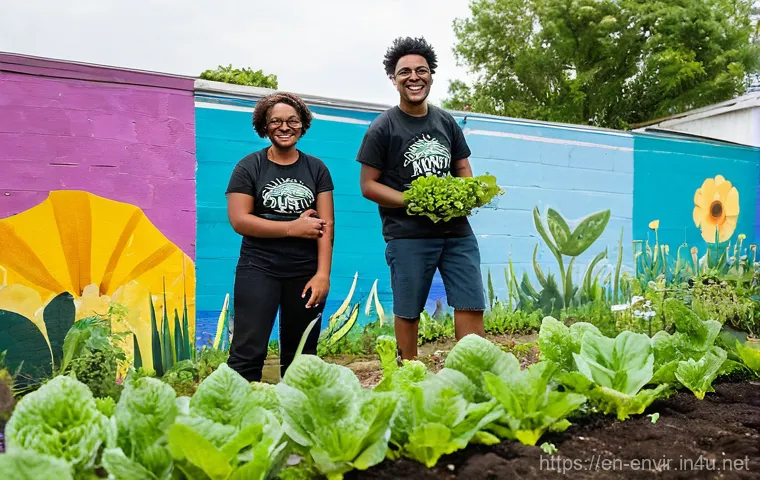
I’ve had the privilege of seeing some truly inspiring examples: urban gardening projects transforming vacant lots, local energy cooperatives installing solar panels, neighborhood recycling and composting programs.
These aren’t just small gestures; they build social cohesion, foster a sense of ownership, and demonstrate that everyone can play a role in creating a more sustainable future.
When individuals feel empowered to act, and when their efforts are supported by local government or NGOs, the cumulative effect can be absolutely transformative.
It’s about tapping into that innate human desire to protect our homes and communities.
Empowering Local Change Makers
I truly believe that the most effective sustainable solutions come from the ground up, driven by passionate individuals and groups within their own communities.
Empowering these local change makers isn’t just a nice idea; it’s a strategic necessity. I’ve seen some fantastic examples where local authorities provide grants, training, or technical assistance to community groups working on sustainability projects.
This support can be the difference between a great idea fizzling out and becoming a thriving initiative. Think about local residents organizing a clean-up of a polluted river, or establishing a community compost facility.
These aren’t always big, flashy projects, but their impact on local environmental quality and community spirit is immense. When people feel heard and supported, they become powerful advocates for change, pushing for more ambitious policies and inspiring others to get involved.
It’s about building a movement from the bottom-up, where everyone feels they have a stake.
Urban Greening and Resilient Cities
Walking through a concrete jungle, it’s easy to forget that nature can thrive even in the densest urban environments. That’s why I’m so passionate about urban greening initiatives and the concept of resilient cities.
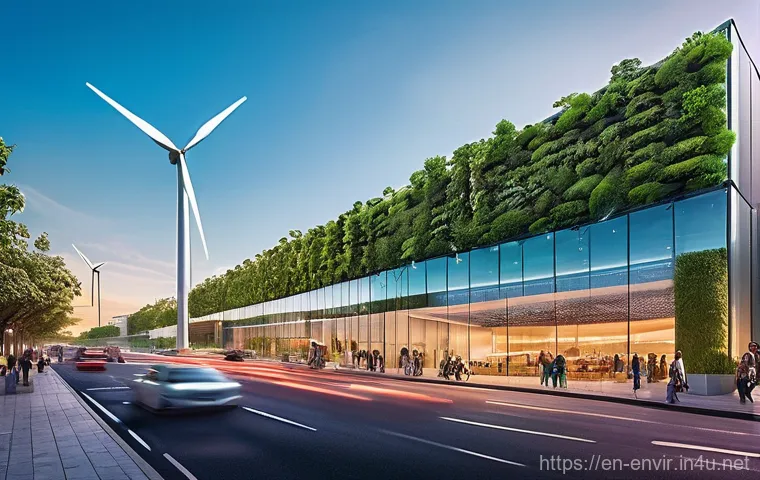
I’ve seen firsthand how incorporating more green spaces – from rooftop gardens to vertical farms and expansive urban parks – doesn’t just make a city prettier; it has profound ecological and social benefits.
Trees clean our air, green spaces reduce the urban heat island effect, and permeable surfaces help manage stormwater runoff. Beyond the environmental benefits, these green oases provide vital spaces for recreation, improve mental health, and foster community interaction.
Cities are also becoming smarter about preparing for climate impacts, investing in resilient infrastructure like sea walls, early warning systems, and decentralized energy grids.
It’s about designing our urban environments not just for today, but for the challenges and opportunities of the future, creating spaces where both people and nature can flourish.
Funding Our Future: Sustainable Finance and Investment
Honestly, when I first started looking into sustainable development, one of my biggest questions was, “How are we going to pay for all of this?” And what I’ve discovered is truly fascinating: the world of finance is undergoing a quiet but profound revolution.
It’s no longer just about traditional investments; there’s a rapidly growing movement towards ‘sustainable finance,’ where environmental and social factors are actively integrated into investment decisions.
We’re talking about everything from green bonds that fund environmentally friendly projects to impact investing, where investors seek both financial returns and positive social/environmental outcomes.
I’ve seen how major financial institutions are increasingly screening companies for their ESG performance, recognizing that strong sustainability practices often indicate better long-term financial health and lower risk.
This shift is critical because it means capital is actively being directed towards solutions that address global challenges, rather than inadvertently supporting practices that harm our planet.
It’s about aligning profit with purpose, and frankly, that’s incredibly exciting to witness.
| Policy Area | Traditional Economic Approach | Sustainable Development Approach |
|---|---|---|
| Energy Policy | Focus on fossil fuel extraction; energy security via domestic supply; high emissions. | Promote renewable energy sources; invest in energy efficiency; incentivize low-carbon technologies. |
| Resource Management | Linear “take-make-dispose” model; resource exploitation; waste generation. | Circular economy principles; resource efficiency; waste reduction, reuse, and recycling; sustainable sourcing. |
| Urban Planning | Car-centric development; sprawl; limited green spaces; focus on new construction. | Public transport investment; mixed-use developments; green infrastructure; urban densification; resilient design. |
| Economic Incentives | Subsidies for polluting industries; tax breaks for resource-intensive activities. | Carbon pricing; green taxes; subsidies for sustainable agriculture and clean tech; tax incentives for eco-innovation. |
The Green Bond Revolution
If you haven’t heard of green bonds yet, you absolutely should! I think they’re one of the most innovative financial instruments to emerge in recent years, and I’ve been following their explosive growth with keen interest.
Essentially, green bonds are like any other bond, but the proceeds are exclusively used to finance environmentally friendly projects, such as renewable energy installations, sustainable forestry, or clean transportation.
It’s a way for investors to directly support the green transition, and for organizations to raise capital specifically for their sustainability initiatives.
I’ve seen governments, municipalities, and corporations issue billions of dollars in green bonds, and the demand from investors is consistently high. It’s a fantastic example of how finance can be a powerful force for good, channeling capital towards projects that are vital for our planet’s health and future.
Aligning Capital with Values
For a long time, it felt like investing was purely about maximizing financial returns, often without much consideration for the ethical or environmental implications.
But I’ve personally felt a huge shift in this mindset, where more and more investors, from individuals to massive institutions, are actively seeking to align their capital with their values.
This isn’t just about avoiding ‘bad’ investments; it’s about proactively supporting companies and projects that are genuinely working towards a better world.
We’re seeing the rise of ESG investing (Environmental, Social, and Governance), where companies are screened not just on their balance sheets but also on their sustainability practices, labor relations, and ethical leadership.
It’s creating a powerful market signal: companies that prioritize sustainability are increasingly rewarded with investment, while those that don’t might find it harder to attract capital.
This evolving landscape of sustainable finance is a testament to the growing realization that what’s good for the planet and society can also be good for business.
From Waste to Wealth: Embracing the Circular Economy
You know, for decades, our economy has largely operated on a linear model: take resources, make products, use them, and then throw them away. But honestly, that just doesn’t make sense on a finite planet, does it?
That’s why I’m so incredibly enthusiastic about the burgeoning movement towards a circular economy. It’s a radical rethinking of how we produce and consume, moving away from waste and towards value retention.
Imagine products designed to be easily repaired, reused, or fully recycled, with materials constantly flowing back into the economy rather than ending up in landfills.
I’ve seen some amazing examples, from companies designing packaging that’s fully compostable to manufacturers offering ‘product-as-a-service’ models where you lease instead of own, ensuring products are maintained and eventually reclaimed by the producer.
It’s not just about recycling, which is crucial, but about designing out waste and pollution from the very beginning. This shift offers huge economic opportunities, reducing reliance on virgin resources and creating new business models.
Rethinking Our Consumption Patterns
This one is a big one, and it touches on all of us. I often find myself reflecting on my own consumption habits and how we, as a society, have been conditioned to constantly buy new things.
But a circular economy truly challenges us to rethink this. It’s not about deprivation, but about smarter, more mindful consumption. It’s about valuing durability, repairability, and shared access over endless ownership.
I’ve seen more and more communities embracing repair cafes, where people bring broken items to be fixed instead of tossed. Libraries are now lending out tools and appliances, not just books.
These small shifts in mindset and behavior, when scaled up, have a huge impact. It’s about recognizing the true value of resources and understanding that everything we consume has an environmental footprint.
By supporting businesses and policies that prioritize circularity, we can collectively push towards a more sustainable and less wasteful way of living.
Designing for Longevity and Reusability
I personally get so frustrated with products that are clearly designed to break or become obsolete quickly. It feels incredibly wasteful, doesn’t it? That’s why one of the core principles of the circular economy – designing for longevity and reusability – resonates so deeply with me.
This means shifting the focus of product development from short-term sales to long-term value. Imagine a smartphone designed with modular components that can be easily upgraded or repaired, rather than replaced entirely.
Or clothing made from durable, recyclable materials that can be easily returned to the manufacturer for reuse. I’ve seen some forward-thinking brands already doing this, offering take-back programs or designing products that can be easily disassembled for material recovery.
Policies can play a huge role here too, through regulations that mandate repairability or extended producer responsibility schemes. It’s about moving away from built-in obsolescence and towards a future where products are made to last, and their materials are kept in circulation for as long as possible.
Wrapping Things Up
It’s truly been an enlightening journey exploring the multifaceted world of green economies and sustainable development together, hasn’t it? What I’ve really taken away from all of this is that moving towards a greener future isn’t just an aspiration; it’s a tangible, economically viable, and profoundly necessary transformation already underway.
From global agreements to local community projects, and from groundbreaking tech to innovative finance, every piece plays a crucial role. I genuinely believe that by embracing these shifts, we’re not just saving the planet, but actively building a more resilient, equitable, and prosperous world for ourselves and for generations to come.
It truly makes me feel hopeful about what we can achieve when we work together.
Useful Information to Keep in Mind
1. Start Small, Think Big: You don’t need to overhaul your entire life overnight. Begin with simple changes like reducing food waste, opting for reusable bags, or switching to energy-efficient light bulbs. Every little action accumulates, and soon you’ll find yourself making bigger, more impactful choices naturally. I’ve found that even just being more mindful of my energy consumption around the house has made a noticeable difference on my utility bills!
2. Explore Local Green Initiatives: Your community likely has incredible resources. Check out local farmers’ markets for sustainable produce, look for community gardens you can join, or find local recycling centers that accept a wider range of materials than curbside pickup. Many towns in the UK and US, for example, have “repair cafes” where volunteers help you fix broken items, extending their life and saving you money. It’s a fantastic way to connect with like-minded people too.
3. Invest Thoughtfully: If you’re looking to make your money work for a greener future, consider sustainable investment options. Many banks and financial advisors now offer “green” funds or ESG (Environmental, Social, Governance) portfolios. You can also research companies committed to sustainability before making purchasing decisions. Even switching your electricity provider to one that sources from renewables, if available in your area, can be a powerful step.
4. Advocate for Change: Your voice matters more than you think! Support policies that promote renewable energy, environmental protection, and a circular economy. Write to your local representatives, join environmental groups, or simply talk to friends and family about the importance of sustainability. I’ve personally seen how collective advocacy can influence real change, from local plastic bag bans to national clean energy targets. It truly empowers you.
5. Educate Yourself Continuously: The world of sustainable development is constantly evolving with new technologies and best practices. Follow reputable environmental organizations, read articles and books, and stay informed about climate science and innovative solutions. The more you know, the better equipped you’ll be to make informed decisions and inspire others to embrace a greener lifestyle. There’s always something new to learn!
Key Takeaways
The shift to green economies is happening, driven by innovation, global collaboration, and local action. It’s about rethinking our economic models for true prosperity, moving towards sustainable finance, and embracing circular principles to minimize waste.
Each of us plays a role in fostering this future, from our daily choices to advocating for systemic change.
Frequently Asked Questions (FAQ) 📖
Q: So, what exactly is “sustainable development policy,” and why should someone like me even care about it?
A: That’s a fantastic question, and one I get a lot! You know, for a while, I used to think of “sustainable development” as this really high-level, academic concept that didn’t really touch my day-to-day.
But boy, was I wrong! At its heart, sustainable development policy is all about figuring out how we can keep moving forward as a society – growing our economies, innovating, and improving lives – without completely trashing our planet or leaving anyone behind.
It’s like trying to build a really sturdy, beautiful house that’s not only great for us now but will also stand strong for our kids and grandkids. I’ve personally seen how these policies aim to balance three big things: economic growth, social equity, and environmental protection.
Think about it: when a local council decides to invest in more public transport or greener buildings, that’s a sustainable development policy in action.
It means cleaner air for our kids, better job opportunities in new green industries, and a more vibrant community for everyone. It really hit home for me when I noticed how much better the air quality got in my city after they started pushing for more electric buses.
It affects our health, our wallets, and the very future of our neighborhoods, so it’s definitely something worth paying attention to!
Q: We hear a lot about “net-zero targets” and the “circular economy.” How are these big ideas actually put into practice through sustainable development policies?
A: Oh, these are definitely two of the hottest topics right now, and for good reason! They might sound a bit like buzzwords, but trust me, they’re incredibly powerful concepts driving so much change.
From what I’ve observed, “net-zero targets” are basically our promise to ourselves and the planet that we’re going to either eliminate all our greenhouse gas emissions or, if we absolutely can’t, offset them entirely.
Imagine a company deciding to power its factories entirely with solar and wind, or a country investing heavily in planting trees to absorb carbon. That’s net-zero thinking in action.
Governments are setting policies that incentivize businesses to switch to renewable energy, build more energy-efficient homes, or even develop carbon capture technologies.
I remember seeing a local bakery switch to completely compostable packaging – that’s a tiny but mighty step towards net-zero! Then there’s the “circular economy,” which is truly revolutionary.
Instead of our old “take-make-dispose” model, it’s all about designing products so they can be reused, repaired, or recycled over and over again. Policies supporting this might include regulations that require manufacturers to take back old electronics or give incentives for companies to use recycled materials.
I’ve been fascinated by how some fashion brands are now creating clothes from recycled plastic bottles, and it’s all thanks to policies and consumer demand pushing for a more circular approach.
It just makes so much sense, doesn’t it? Less waste, more value, and a healthier planet.
Q: Can you give me some real-world examples of successful sustainable development policies that are making a difference, and how might they impact my own life?
A: Absolutely! This is where it gets really exciting, because we’re not just talking theory anymore – we’re seeing actual, tangible results. One area where I’ve seen incredible progress is in “green infrastructure” projects.
Many cities, for instance, are implementing policies to replace concrete with green spaces, like urban parks, rooftop gardens, and permeable pavements.
I personally noticed a huge difference in my city’s flood resilience during heavy rains after they converted an old industrial plot into a massive park with retention ponds.
These policies not only help manage stormwater and reduce the urban heat island effect, but they also create beautiful, livable spaces that boost our well-being and even increase local property values.
Another fantastic example is the surge in international agreements focused on renewable energy. Countries are collaborating on policies that drive down the cost of solar panels and wind turbines, making clean energy more accessible and affordable for everyone.
I’ve switched almost completely to energy-efficient appliances and LED lighting at home, and my electricity bills have honestly never been lower. Plus, knowing that I’m contributing to cleaner air is a huge bonus!
These policies aren’t just about distant political debates; they directly affect the air we breathe, the water we drink, the jobs available, and even the choices we make at the grocery store.
They’re shaping a future where our communities are more resilient, our economies are more innovative, and our planet is healthier for generations to come.
It’s truly amazing to witness the positive ripple effects these changes are creating all around us.